Islamic University, Babylon
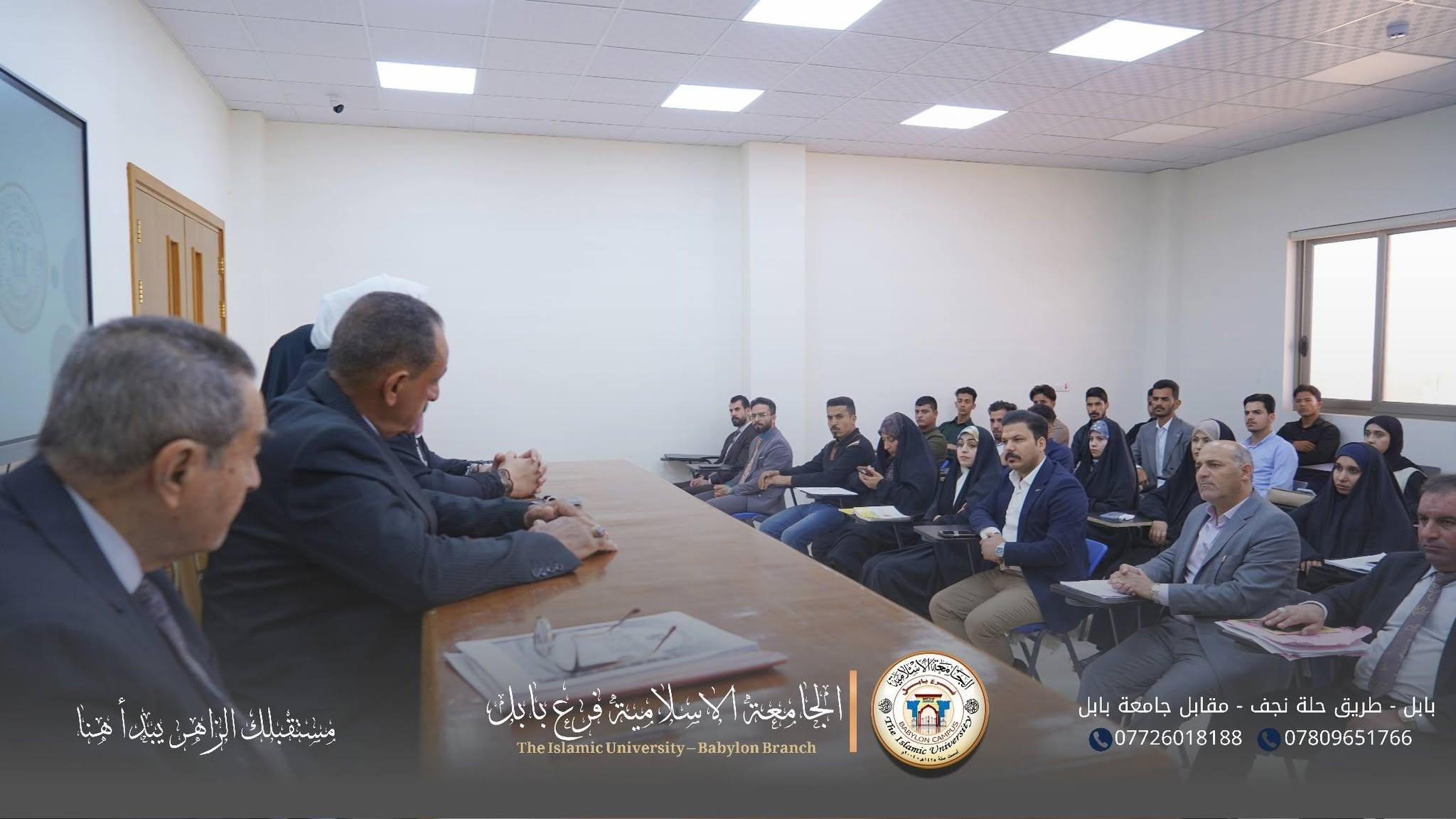
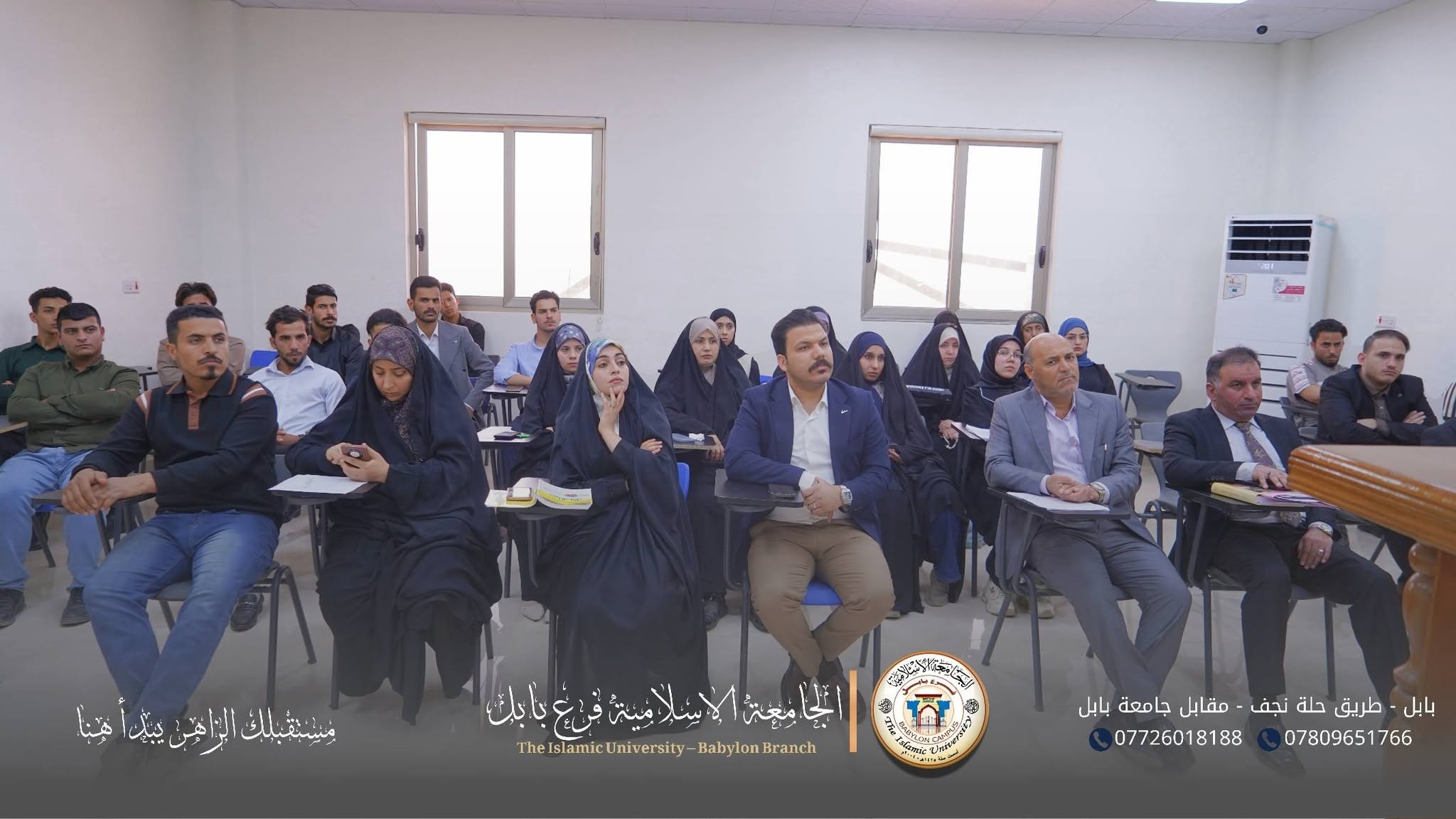
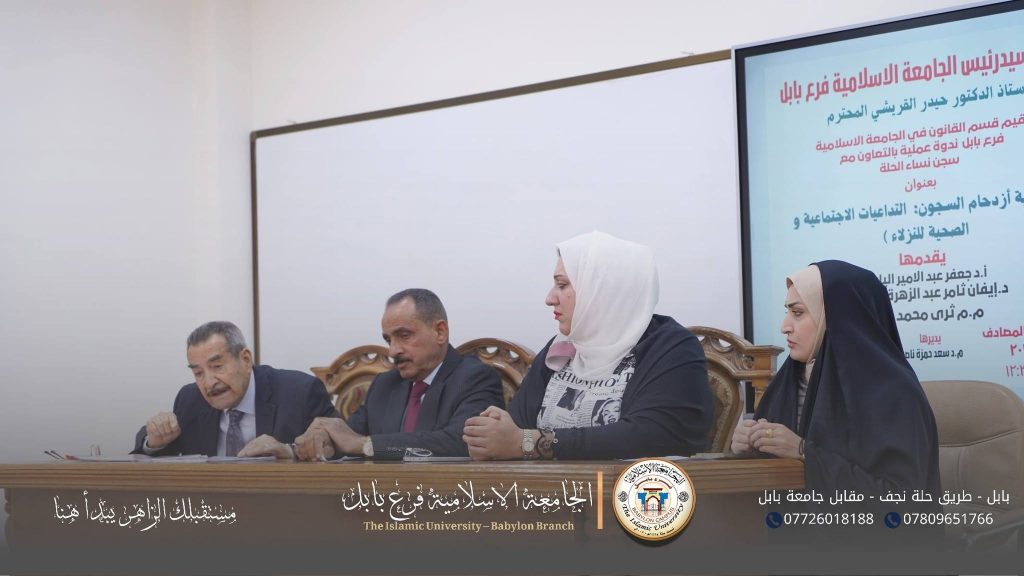
Motivated by the role of academic institutions in promoting legal awareness and addressing pressing social issues, and with a focus on shedding light on the challenges confronting correctional systems, the Law Department held a scientific seminar entitled: “The Crisis of Prison Overcrowding: Social and Health Repercussions for Inmates.”
Motivated by the role of academic institutions in promoting legal awareness and addressing pressing social issues, and with a focus on shedding light on the challenges confronting correctional systems, the Law Department held a scientific seminar entitled: “The Crisis of Prison Overcrowding: Social and Health Repercussions for Inmates.”
“The Crisis of Prison Overcrowding: Social and Health Repercussions for Inmates.”
The seminar featured presentations by Dr. Evan Thamer Abdul-Zahra Al-Janabi, head of the medical detachment at the Hilla Women’s Correctional Prison, and Prof. Dr. Jaafar Abdul-Amir Al-Yassin, a faculty member in the Law Department, alongside Assistant Lecturer Thura Mohammed Abid, also a faculty member in the department. The event was held in the presence of the Head of the Law Department, Lecturer Dr. Saad Al-Maamouri.
The seminar addressed prison overcrowding as one of the most prominent challenges facing penal systems worldwide due to its negative impacts on the health and social well-being of inmates, with repercussions extending to society at large. This overcrowding manifests when inmate populations exceed the designated capacity of correctional institutions, leading to a deterioration of the detention environment and a decline in the quality of services provided.
The speakers highlighted the health consequences resulting from overcrowding, including the spread of infectious diseases such as tuberculosis, respiratory infections, and skin conditions, caused by poor ventilation and high density within detention facilities.
In the same context, the seminar discussed the key social drivers behind this phenomenon, which include rising crime rates linked to poverty, unemployment, and social inequality. It also pointed to weak legal awareness, a lack of community education programs, family breakdown, and insufficient social oversight.
The seminar concluded by proposing a set of legal solutions and remedies, most notably expanding the adoption of alternative sentencing options such as bail, fines, parole, and suspended sentences. Additionally, it emphasized the need to build more spacious correctional facilities to accommodate growing inmate numbers, ensuring human justice and improving the reality of the correctional environment.